
Will This Liquidation Pallet Make Money? A Reseller Margin Guide
Will This Liquidation Pallet Make Money?
A pallet can look profitable at first glance and still lose money after the real work begins. The retail value may look high, the unit count may seem strong, and the price may feel like a deal. But those numbers only matter if the inventory can sell at realistic prices, within a reasonable time, after every cost is counted.
The goal is not to predict the future perfectly. It is to make a careful estimate before committing your cash. A simple margin check can help pallet flippers, flea market sellers, bin store owners, and other resellers avoid buying inventory based only on excitement.

Start With Realistic Resale Prices
Retail value is not the same as resale value.
A product may have sold for $100 when it was new, current, fully packaged, and backed by a retailer. That does not mean a reseller will receive $100 for the same item from a liquidation pallet. The actual price depends on condition, demand, packaging, model, local competition, selling platform, and how quickly you want it gone.
Before buying, look at what customers are actually paying in your market. Check completed sales when possible, not only active listings. Active listings show asking prices. Completed sales show what buyers accepted.
Use conservative numbers. If similar items usually sell between $35 and $50, building your estimate around $50 leaves little room for offers, markdowns, damaged packaging, or slower demand.
Your sales channel matters too. A flea market customer, an online marketplace buyer, and a bin store shopper may value the same product differently. Estimate prices based on where you plan to sell.
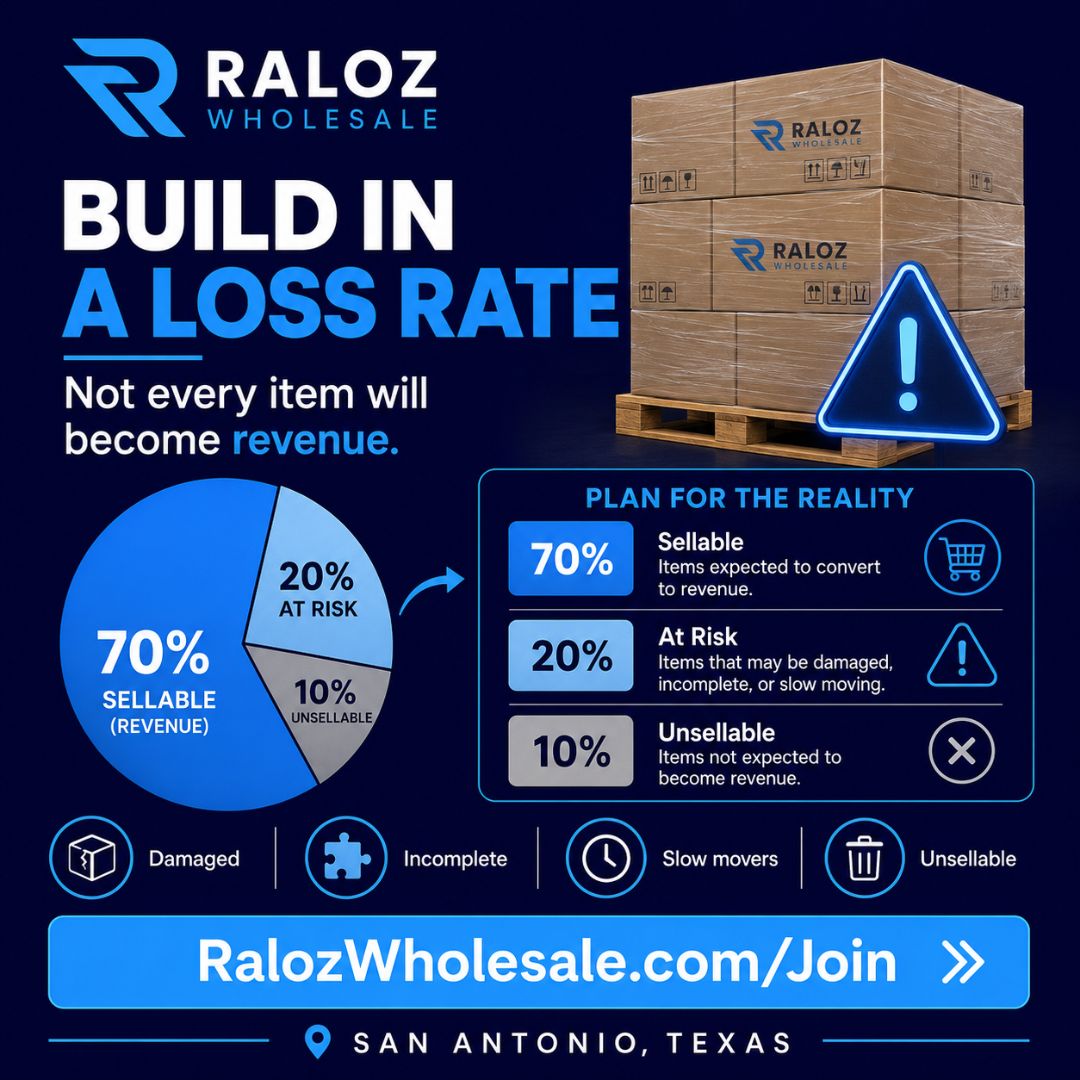
Build In a Loss Rate
Not every item in a liquidation pallet will become revenue.
Some products may be damaged, incomplete, outdated, missing accessories, difficult to test, or too slow to sell. Others may require cleaning, repair, new packaging, or a heavy discount. Even a manifested load should not be treated as if every listed unit will sell at full value.
A practical estimate includes a loss rate: the portion of the load you assume may produce little or no revenue. The right percentage depends on the category, condition, source, and your ability to test or repair items.
A reseller with tools, parts, storage, and repair experience may recover value from inventory another buyer would consider unsellable. A seller who needs clean, ready-to-list merchandise should use a more cautious estimate.
The point is to avoid building the deal around a perfect outcome. If the pallet still makes sense after accounting for losses, the opportunity is stronger.
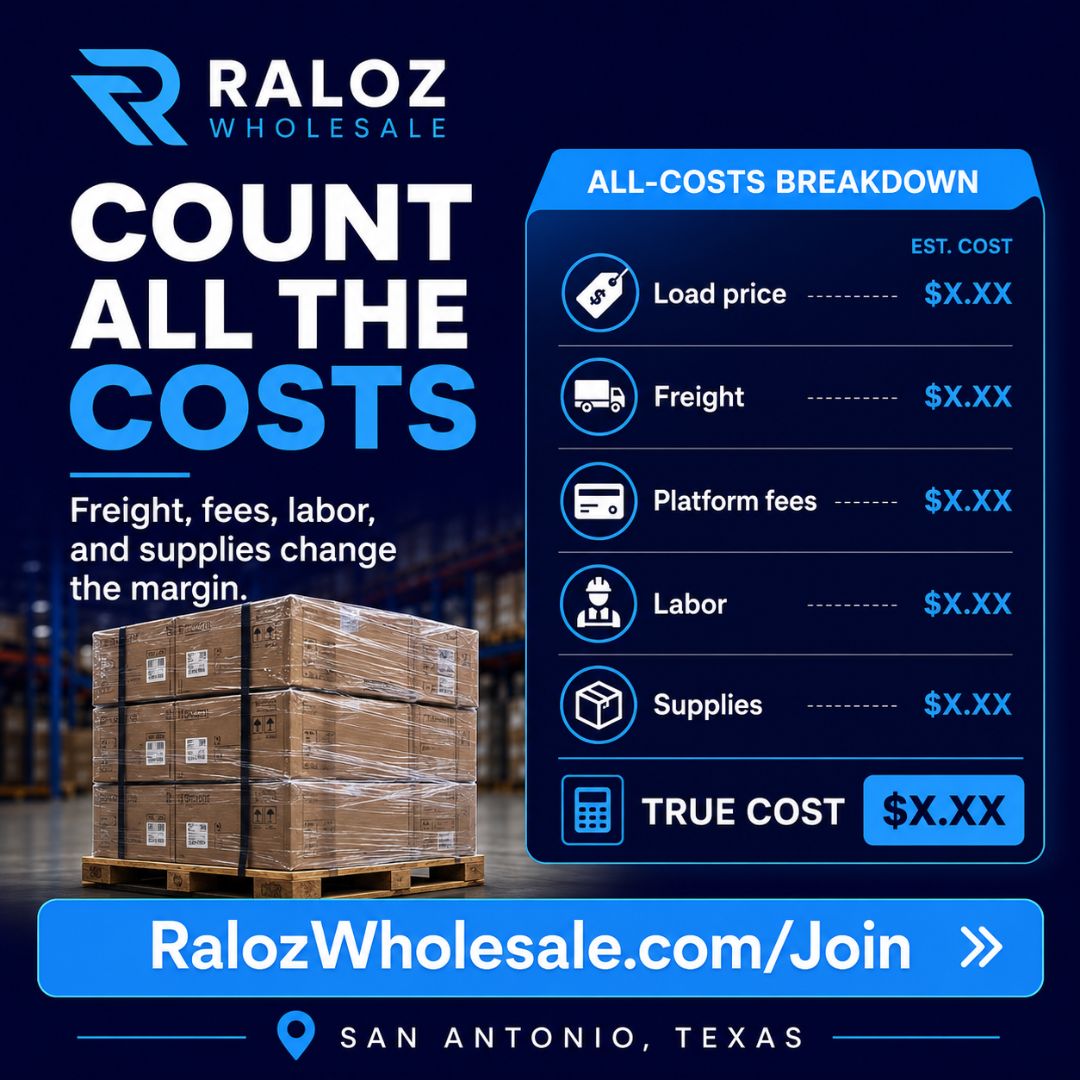
Count Every Cost
The pallet price is only the beginning.
Your total cost may include freight, fuel, unloading, buyer fees, sales fees, labor, testing supplies, replacement parts, cleaning materials, boxes, labels, storage, and disposal. Small costs become significant when repeated across many items.
Start with the landed cost: the total amount required to get the inventory into your possession and ready for processing. If you are picking up from a San Antonio warehouse, include fuel, vehicle costs, labor, and receiving time. If freight is involved, include shipping and likely extra charges.
Then calculate selling costs. Online platforms may charge fees. Local delivery requires fuel and time. Shipping individual products requires boxes, tape, padding, labels, and handling. Flea market inventory may come with booth rent, tables, storage, or staffing costs.
Labor is easy to ignore when you do the work yourself. Sorting, testing, cleaning, photographing, listing, answering messages, and meeting buyers all take time. The workload affects whether the pallet is worth buying.
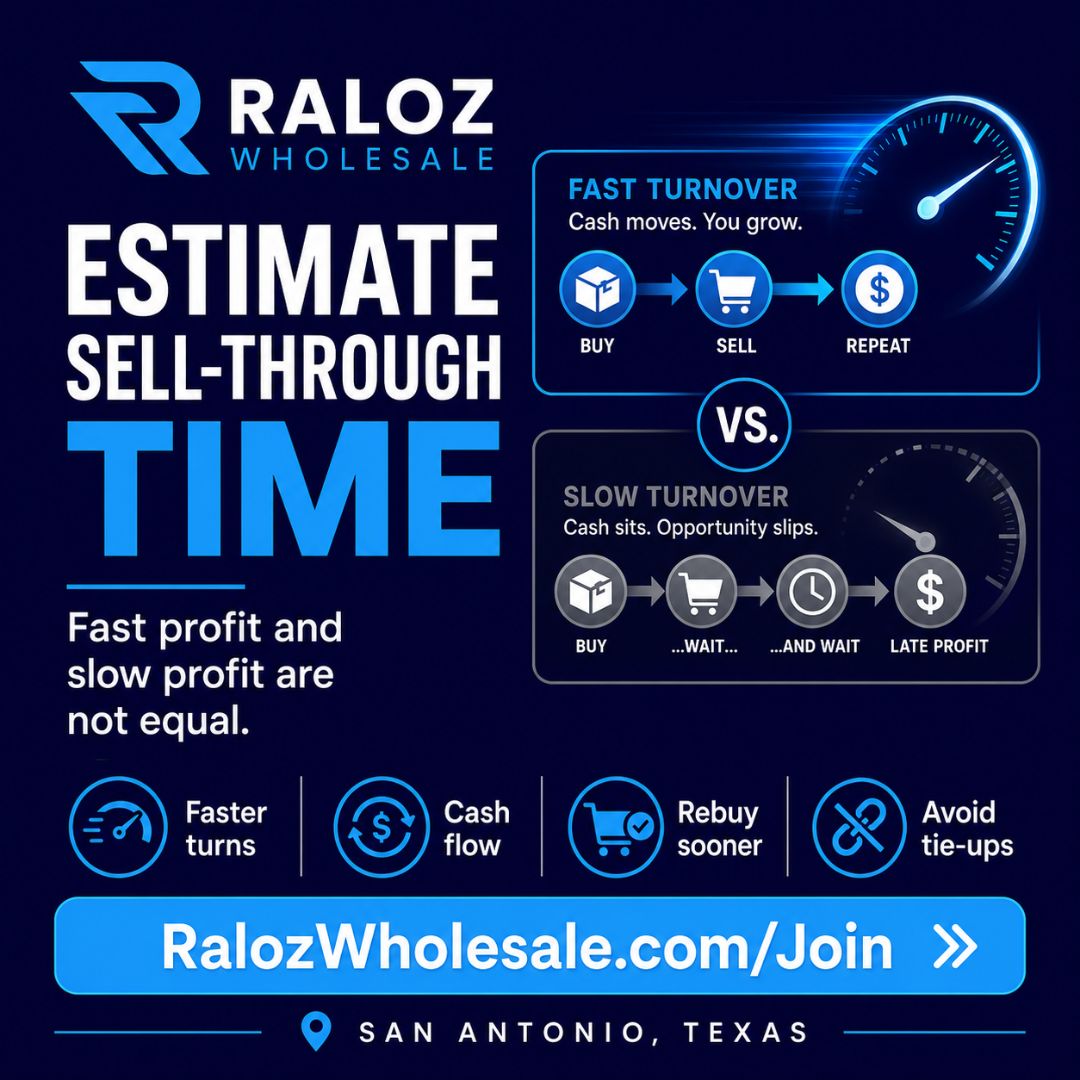
Estimate Sell-Through Time
Two pallets can produce the same gross profit and still be very different deals.
One may sell in two weeks. The other may take six months, occupy valuable space, require repeated markdowns, and delay your next purchase. Cash tied up in slow inventory cannot be used for a better opportunity.
Estimate sell-through time using your past results. Which categories move quickly? Which price points get the most responses? Which items sit until discounted? Your own sales history is more useful than a general claim that a category is popular.
Also compare load size with your normal sales speed. Buying 300 units may look efficient, but not if you only sell 30 similar units per month. The extra merchandise may become a storage problem before it becomes revenue.
Plan an exit strategy for slow movers. You may bundle them, move them to another channel, discount them, use them as bin store inventory, or wholesale them to another reseller. Decide before buying, not after products start stacking up.
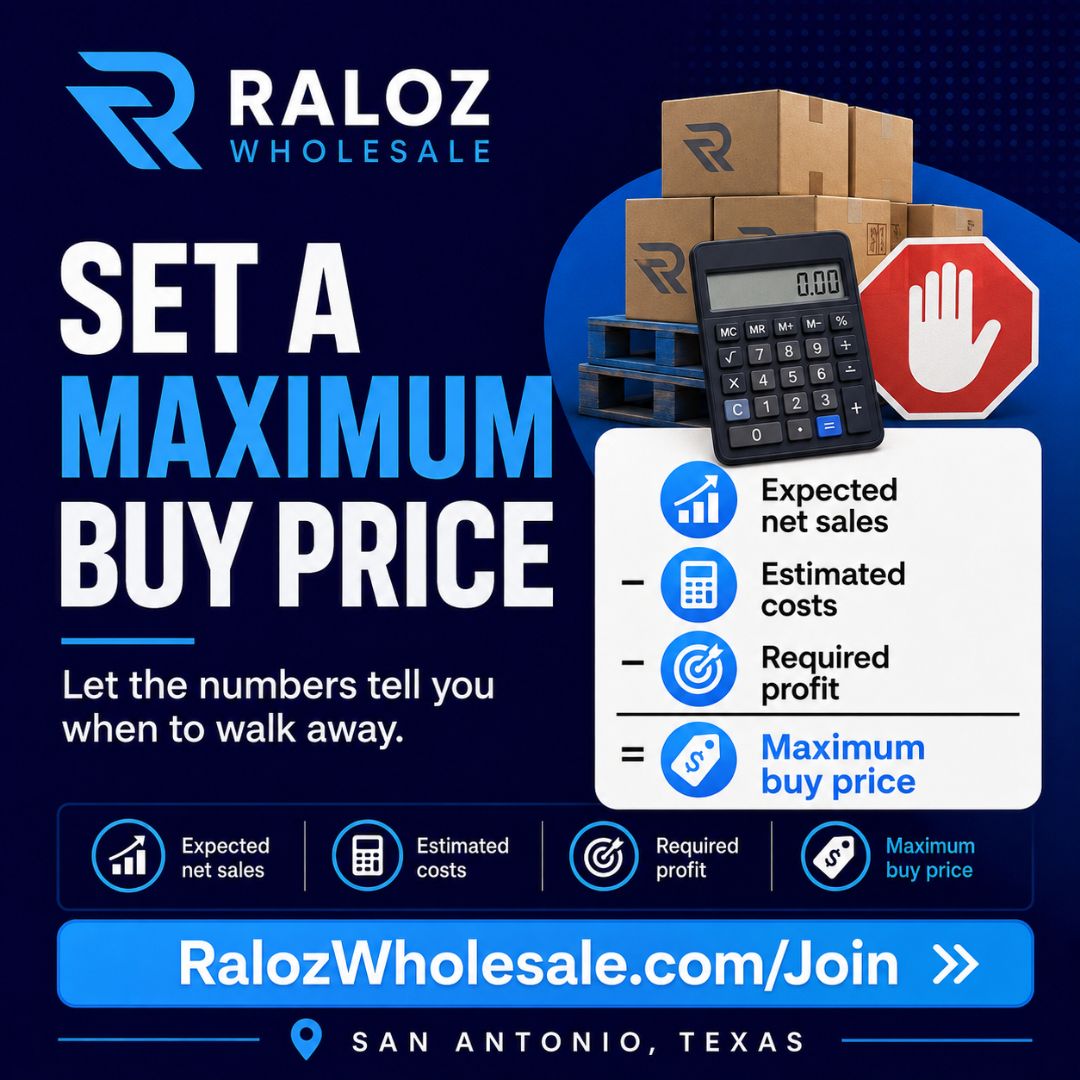
Set a Maximum Buy Price
Once you have estimated realistic revenue, losses, costs, and sell-through time, work backward to a maximum buy price.
Start with expected revenue. Subtract unsellable inventory, freight, fees, supplies, labor, and other operating costs. Then leave room for the margin your business needs. What remains is the highest price your estimate can support.
This step removes emotion from the decision. If the asking price is higher than your maximum buy price, the numbers are telling you to negotiate, choose a smaller load, or walk away.
Walking away is part of pallet flipping. Not every load is right for every buyer. The goal is to buy reseller inventory that fits your customers, operation, space, and cash flow.
Make the Numbers Work Before You Buy
No estimate removes every risk from wholesale liquidation. Conditions vary, customer demand changes, and some items will perform differently than expected. But a careful review gives you a better starting point than relying on retail value or unit count alone.
Use realistic resale prices, include a loss rate, count every cost, estimate selling time, and set a maximum buy price before committing. When the numbers work under conservative assumptions, you can buy with a clearer plan. When they do not, walking away may protect your cash for a better pallet or truckload.
Want to stay connected when new pallets and truckloads are available? Join the Buyers List at RalozWholesale.com/Join and stay updated with Raloz Wholesale.
