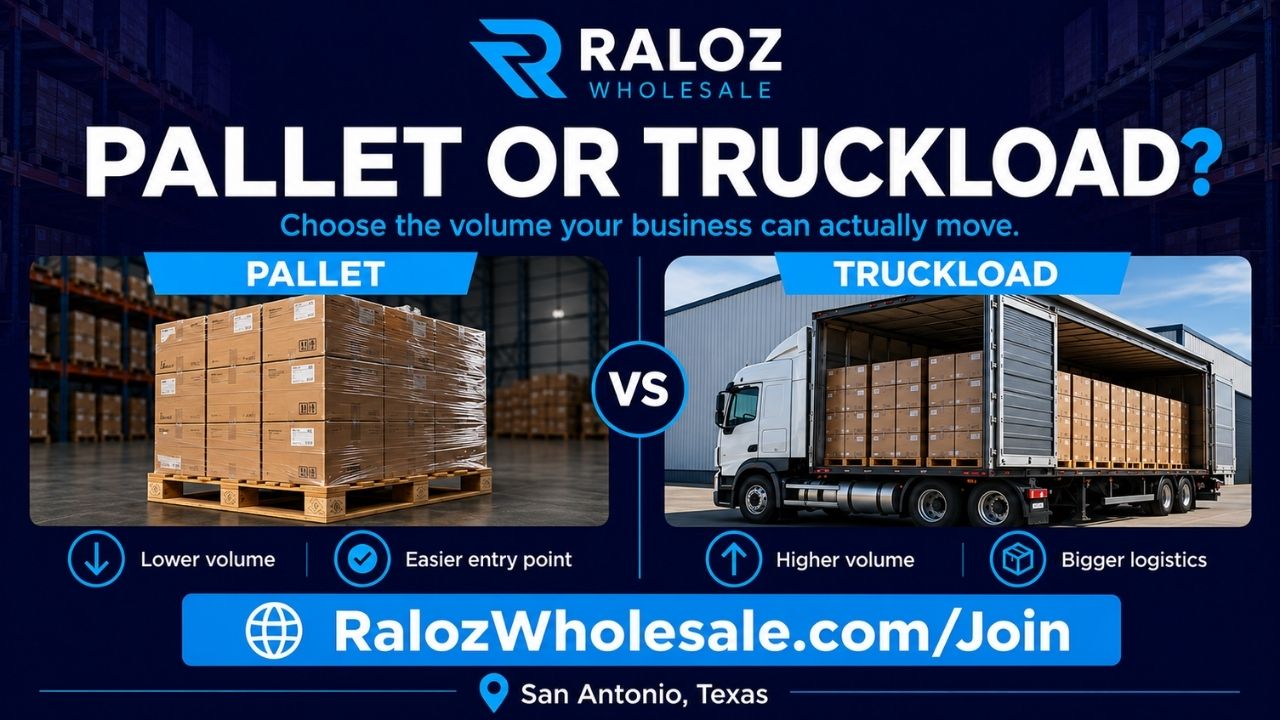
Pallet or Truckload? How Resellers Choose the Right Inventory Volume
Buying liquidation inventory is not just about getting a good price. It is about choosing a volume your business can move.
For many resellers, the big question is simple: should you buy a pallet or step up to a truckload? Both can make sense, but they fit different stages of a resale business. A pallet can help you test products and learn your numbers. A truckload can give you more inventory and a stronger cost-per-unit opportunity, but it also brings more responsibility.
At Raloz Wholesale, buyers come in at different levels. Some are testing their first liquidation pallets. Others run flea market booths, online stores, bin stores, or small resale operations. The right choice depends on your space, sales speed, budget, labor, and plan.
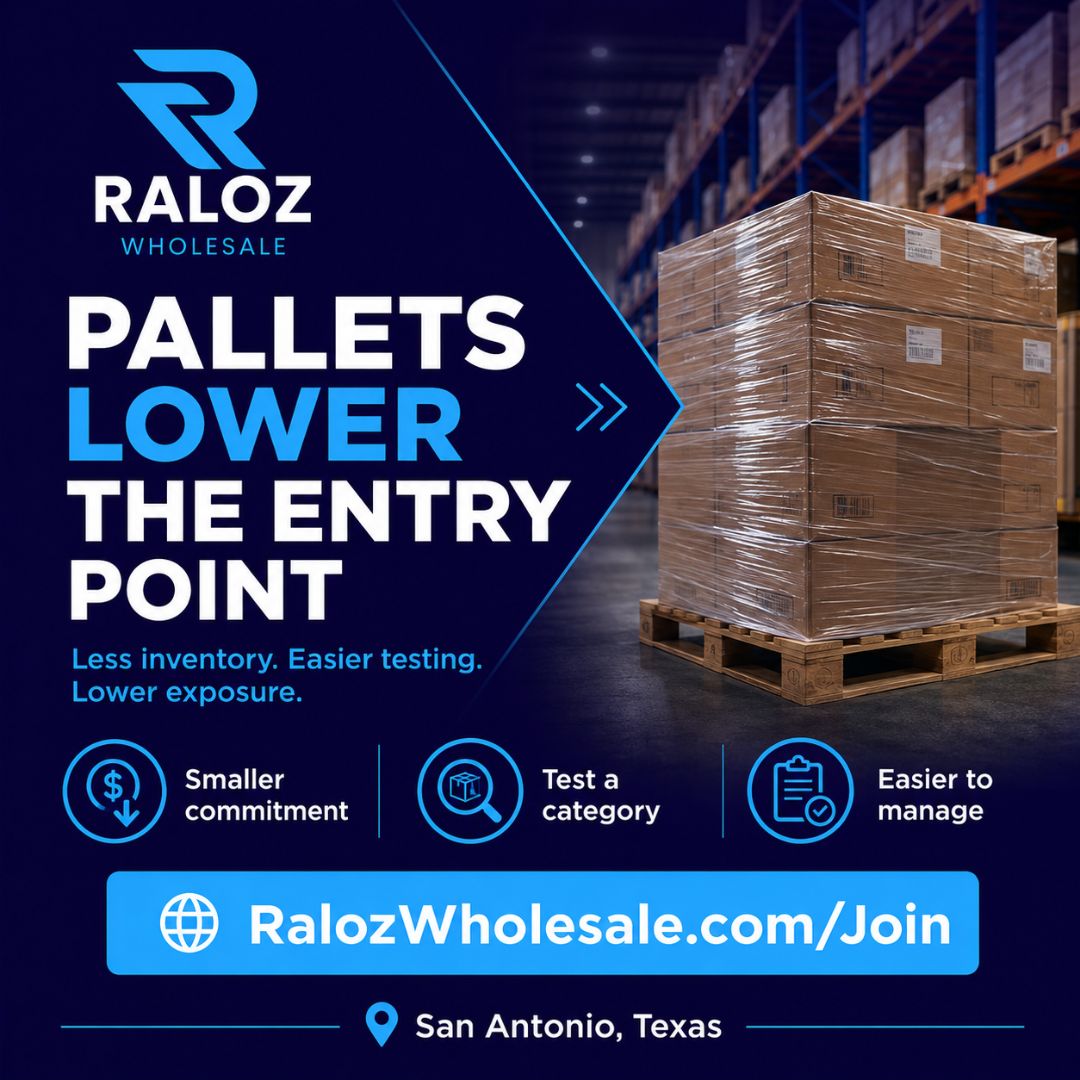
Pallets Lower the Entry Point
Pallets are often the better starting point because they let buyers learn without taking on too much inventory at once. You can test a category, see what the condition mix looks like, and figure out how your customers respond.
Liquidation is not the same as buying new retail stock. Items may include returns, shelf pulls, overstock, packaging damage, or mixed conditions. A pallet gives you a smaller sample size, which helps when you are still learning how to inspect, sort, price, and sell.
For a new pallet flipper, one pallet can teach a lot. You learn how long sorting takes, which items move quickly, what sits, and how much time it takes to list products online or prepare merchandise for a flea market table.
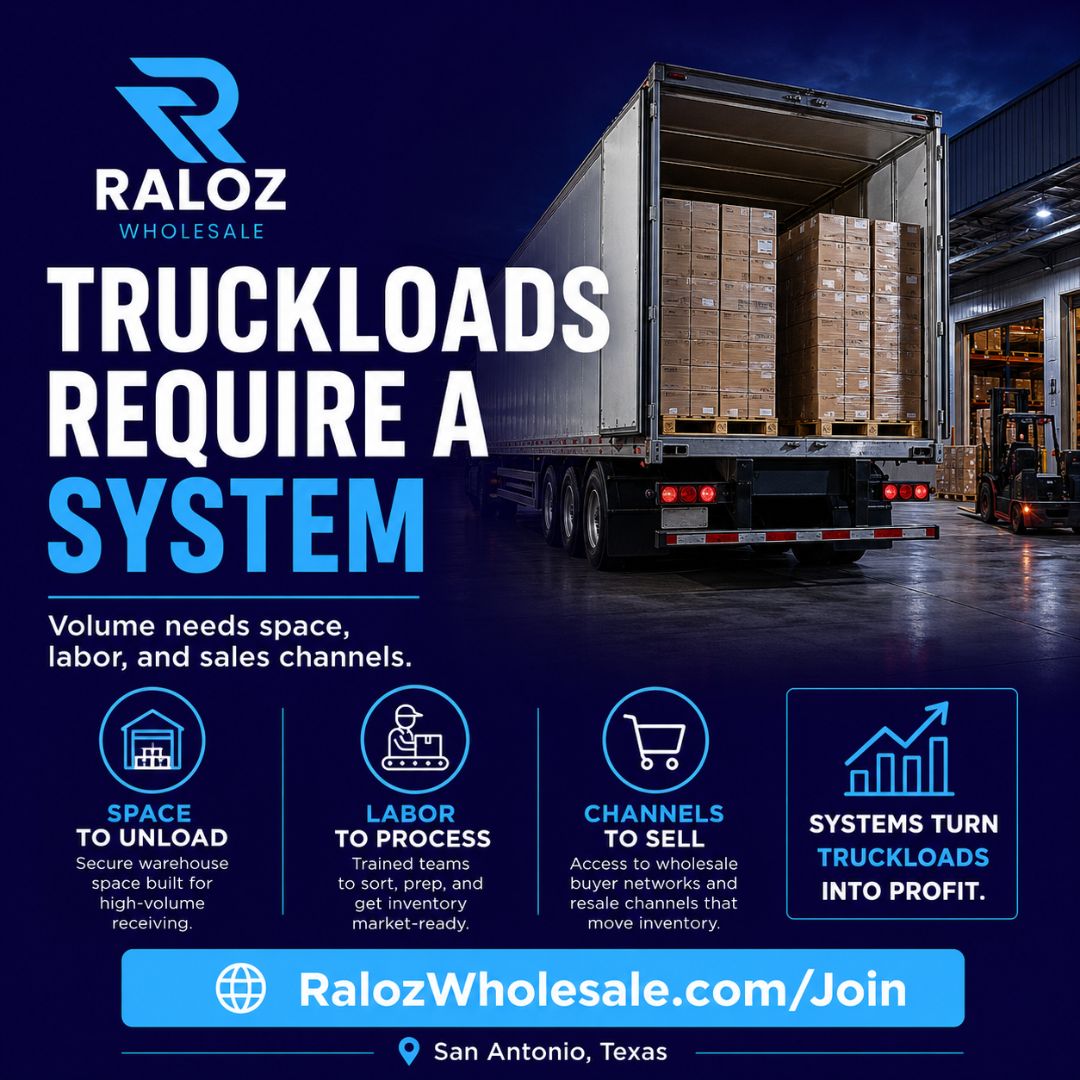
Truckloads Require a System
A truckload is not just “more pallets.” It is a different level of operation.
Truckloads can make sense when you already have space, labor, storage, transportation, and selling channels. The inventory still needs to be unloaded, sorted, tested, priced, stored, displayed, listed, and sold.
This is where some buyers get into trouble. They see a better cost per unit and move too fast. But volume is only helpful if your business can process it.
Before buying a truckload, ask yourself: Where will it go when it arrives? Who will help unload it? How quickly can the merchandise be sorted? How many sales channels do you have?
A bin store owner may need truckload volume because the business model depends on regular drops. A flea market seller may need a smaller amount if they only sell a few days at a time. An online reseller may handle a truckload only with space, listing help, and a system for shipping or local pickup.
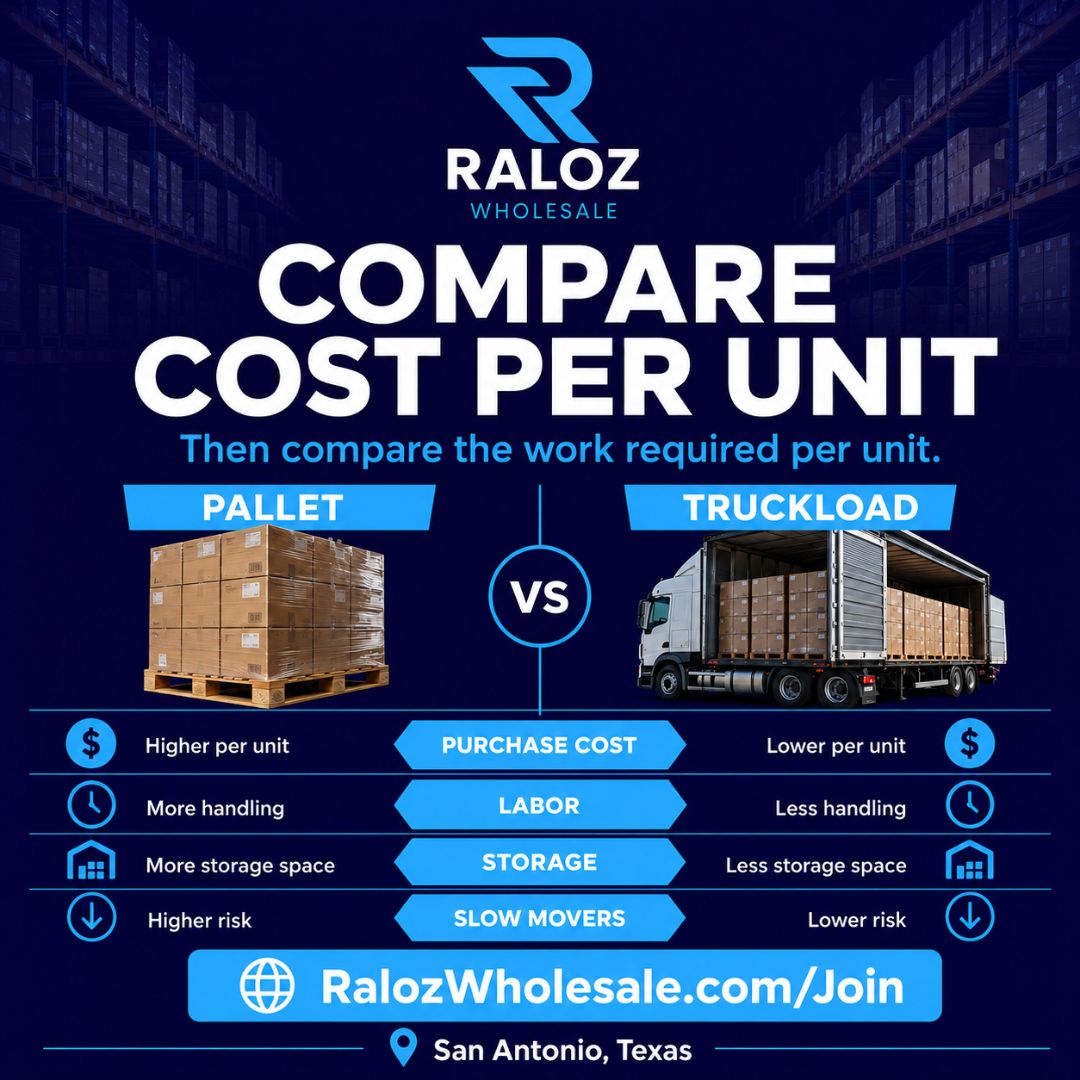
Compare Cost Per Unit and Work Per Unit
Truckloads may look attractive because the cost per unit can be lower than buying smaller lots. That is one reason experienced buyers consider scaling up. But cost per unit is only one side of the math.
You also need to compare the work required per unit. A cheap item still takes time to touch, inspect, sort, price, move, and sell. If an item needs testing, cleaning, photos, descriptions, or customer support, that time matters.
The better question is not only, “How much does each unit cost?” It is also, “How much work does each unit create?”
That is why buyer planning matters. Manifested loads can help buyers review item details when available, while unmanifested loads may require more comfort with mixed inventory and unknowns. Neither option is automatically better. The right fit depends on your experience, sales model, and risk tolerance.
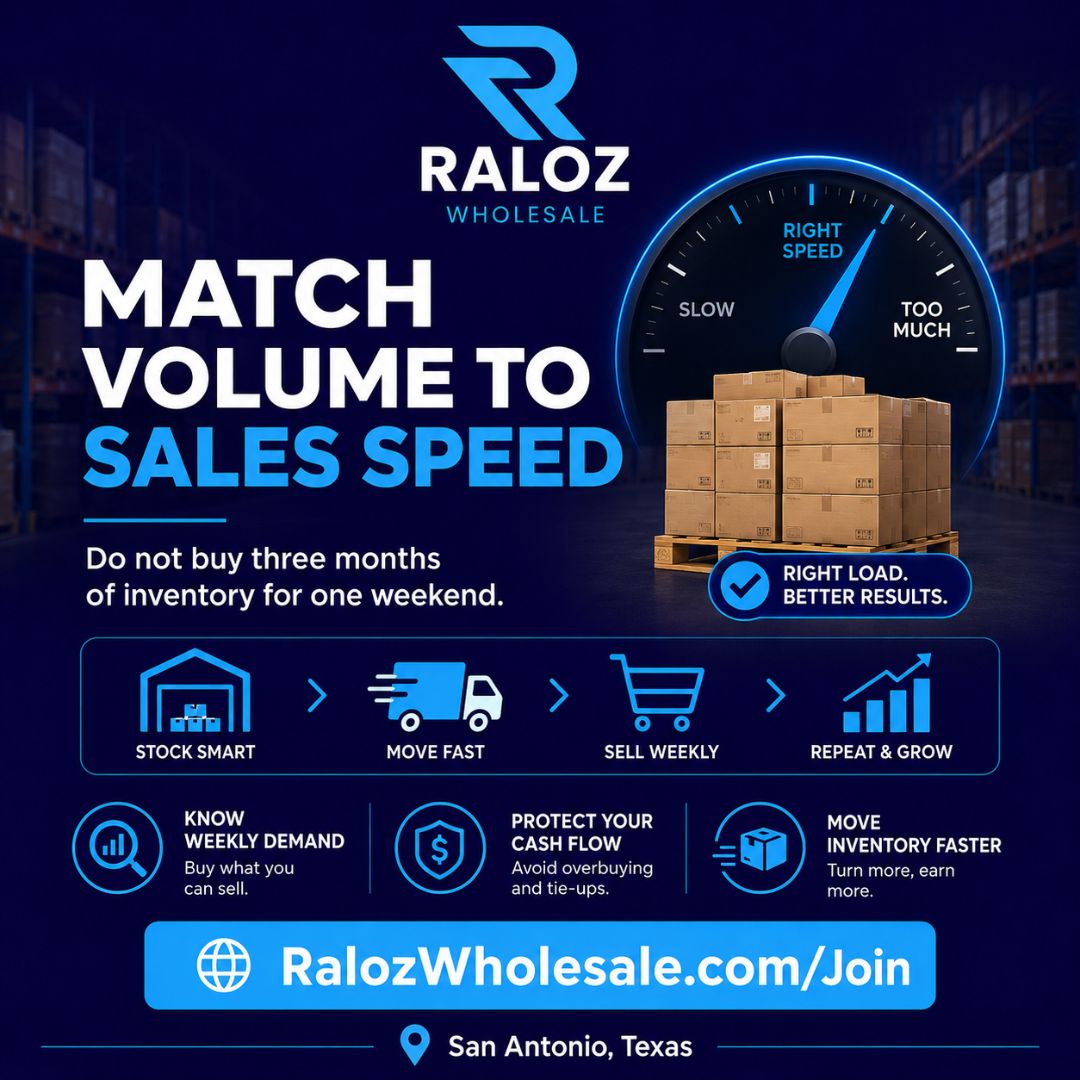
Match Volume to Sales Speed
Inventory should match how fast you can sell.
Do not buy three months of inventory for one weekend of selling. That creates pressure, clutter, and cash tied up in products that are not moving yet.
Sales speed is different for every reseller. A flea market seller may move certain categories quickly because customers can see the merchandise in person. An online seller may get stronger prices on some items, but each product may need photos, descriptions, messages, and shipping. A bin store may move many units, but it needs enough inventory flow to keep tables fresh.
Before choosing between a pallet and a truckload, look at your real selling rhythm. How much inventory did you sell from your last buy? How long did it take? Which categories moved fastest? Which ones sat longer than expected?
Your answers should guide your next purchase. Good buying is not based on excitement. It is based on what your business can move.
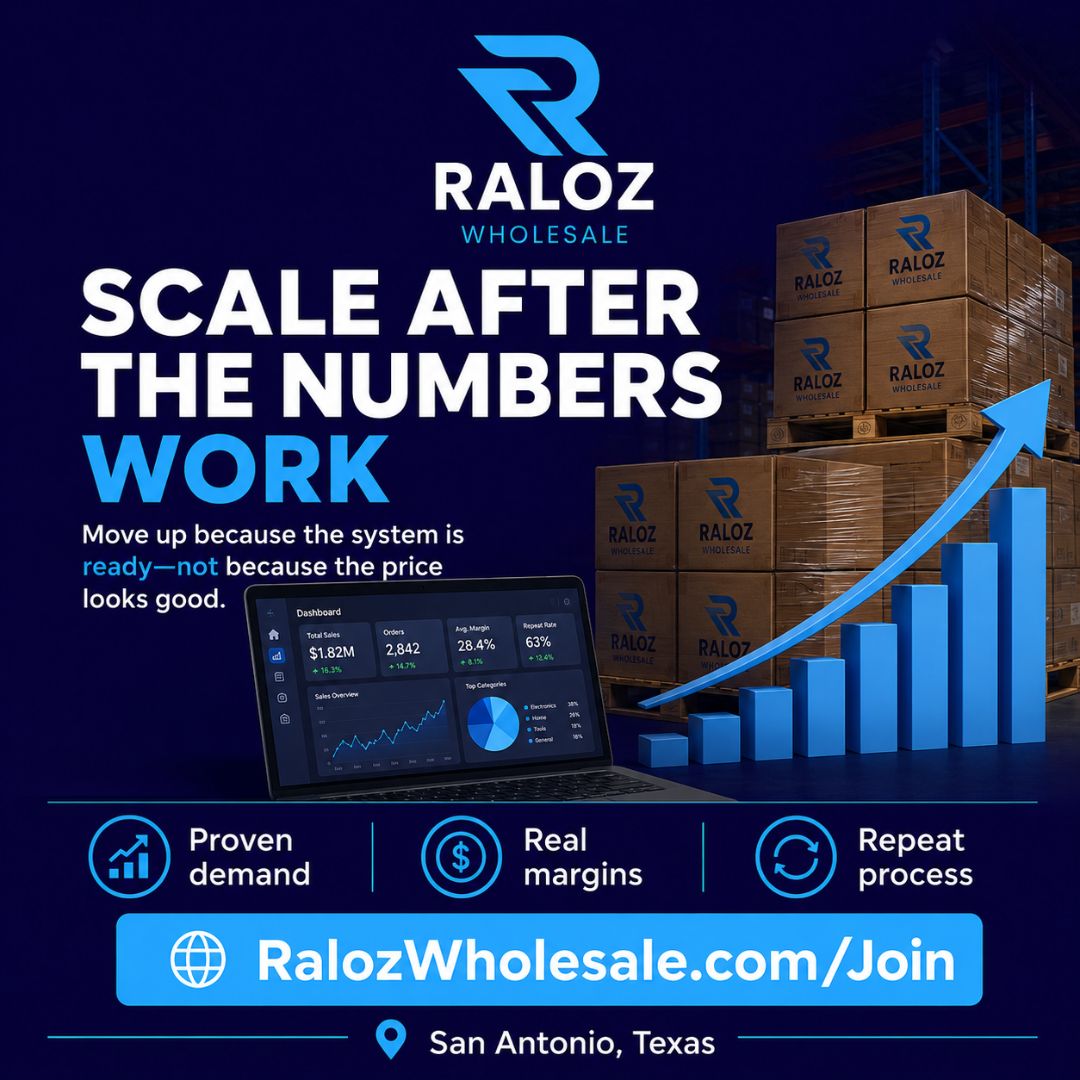
Scale After the Numbers Work
A bigger load can look tempting when the price looks better. But a good price does not fix a weak system.
If you do not have space, a truckload can become a problem fast. If you do not have enough time to sort, the best items may sit buried. If you do not know where you will sell the inventory, you may end up discounting too hard just to clear room.
Scale after your numbers prove the system is ready. Track what you buy, what you sell, how long it takes, what categories perform best, and what costs are attached to the process. Include freight, fuel, labor, storage, supplies, platform fees, and markdowns.
If your pallets are selling through steadily and you are running out of good inventory too quickly, a larger load may be worth considering. If you still have unsorted merchandise from your last buy, improve the process before increasing volume.
Pallet or Truckload? The Simple Answer
Choose a pallet if you want to test, learn, and keep the workload manageable.
Choose a truckload if you have the space, labor, systems, and sales channels to handle volume.
Both can be useful. The mistake is buying more than your business can process.
At Raloz Wholesale, buyers can look at pallets, truckloads, manifested and unmanifested options, pickup from the San Antonio warehouse, freight options, and buyer support. The goal is not to push every buyer into the biggest load.
Want to stay connected when new pallets and truckloads are available? Join the Buyers List at RalozWholesale.com/Join and stay updated with Raloz Wholesale.
